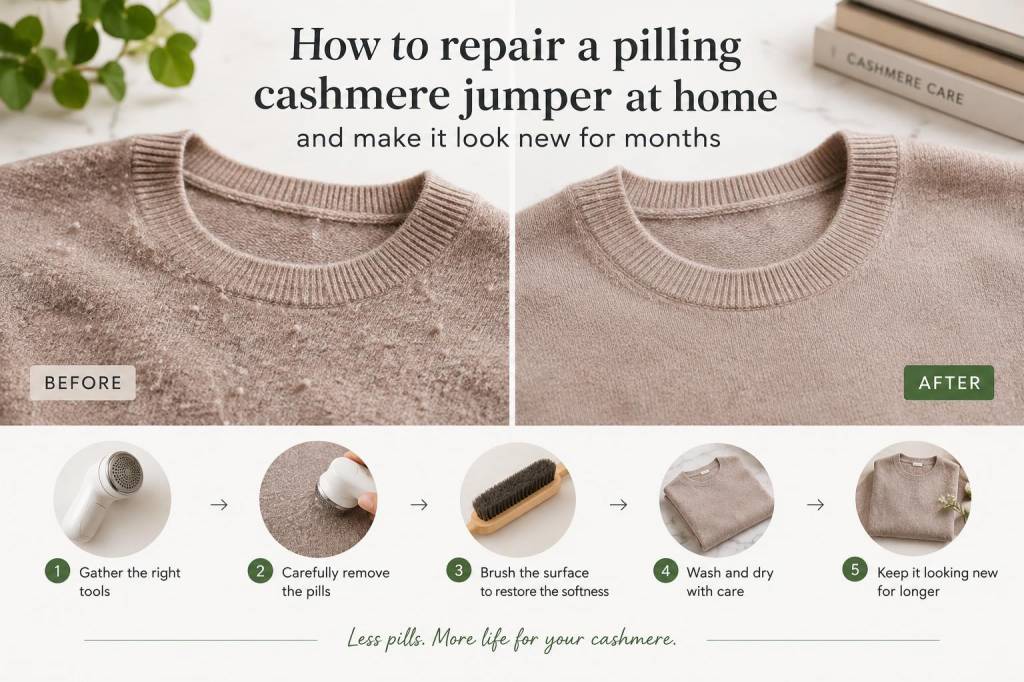
I love a soft cashmere jumper — the way it feels against the skin and how it immediately elevates a casual outfit. But pilling can make an otherwise beautiful piece look tired fast. Over the years I’ve tried everything from harsh razors (don't) to gentle fabric shavers and simple household tricks. Here’s a practical, step-by-step guide I use to repair pilling on cashmere at home and keep the jumper looking fresh for months.
Why cashmere pills (quick primer)
Pilling happens when loose fibres tangle into little balls on the surface of a knit. Cashmere is especially prone because it’s made of short, fine fibres that naturally break and migrate to the surface. Friction — from bags, sleeves, rubbing against other fabrics or even repeated washing — accelerates the process. Pilling is a sign of wear, not necessarily poor quality; the good news is most pills can be removed and the jumper restored.
What you'll need
I keep a small kit by my wardrobe for quick repairs. These are the tools and products that actually work in real life:
Battery or electric fabric shaver — Brands I recommend: Philips, Conair, Evercare. Choose a model with adjustable speed and a good safety guard.Sweater comb or cashmere comb — A fine-toothed comb designed for knitwear; ideal for delicate, controlled de-pilling.Lint roller or sticky tape — For sticky removal of loose fibres after de-pilling.Soft toothbrush or small natural-bristle brush — To lift fibres before shaving and to finish smoothing the surface.Fine scissors — For any stubborn, large snags; only for careful, minimal use.Mesh laundry bag and gentle wool detergent (The Laundress Wool & Cashmere Shampoo or Woolite)Steamer or iron with steam — To reshape after cleaning and remove faint creases.Step-by-step: repairing pilling safely
Before starting, always check the care label. If it says dry clean only, consider a professional for extensive damage. For most machine- or hand-washable cashmere, these steps will do the trick.
1. Lay the jumper flat — Work on a clear, flat surface in good light. Smooth the fabric so pills are visible.2. Lightly brush the surface — Use a soft toothbrush or a cashmere comb to gently loosen surface fibres and bring pills to the top. Brush in one direction; this reduces accidental stretching.3. Test your tool — Pick a small, inconspicuous spot (inside hem or underarm) and test the fabric shaver or comb. Make sure there’s no pulling or hole-forming.4. De-pill in sections — If using a fabric shaver, hold the knit taut (not stretched) and move the shaver across the surface with light pressure. Don’t stay in one place. If using a comb, sweep gently, removing the pills that collect on the comb.5. Use scissors only when necessary — For tangled pills that won’t come away, trim them carefully with small scissors. Cut the pill close to the surface but avoid cutting into the fabric.6. Remove loose fibres — Use a lint roller or tape to pick up any remaining debris. A gentle vacuum with a soft brush attachment also works on stubborn fluff.7. Smooth and re-shape — Finish by steaming lightly or pressing with a warm iron through a cloth. This relaxes the fibres and restores the jumper’s drape.Washing and aftercare to keep it looking new for months
Repairing is one thing; preventing repeat pilling is another. These small changes in how you wash, store and wear cashmere make the difference.
Wash infrequently, but wash correctly — Cashmere doesn’t need frequent washing. When you do, hand wash in cool water with a specialised wool detergent, or use the delicate/wool cycle inside a mesh bag. Avoid harsh agitation and high spin speeds.Turn inside out — Always turn the jumper inside out before washing to minimise surface friction.Use a gentle detergent — Choose products formulated for wool and cashmere (The Laundress, Ecover, or Woolite). These preserve fibres and natural oils.Dry flat — Never tumble dry. Press gently to remove excess water and lay flat on a towel to dry in shape. Reshape sleeves and hems while damp.Rotate wear — Avoid wearing the same jumper consecutive days. Giving the fibres time to relax reduces pressure on the yarn and therefore pilling.Store correctly — Fold cashmere instead of hanging it. Hanging stretches shoulders and can increase wear. Use breathable cotton storage bags for long-term storage and add cedar blocks to deter moths.Quick fixes for last-minute emergencies
If you’re heading out and notice sudden pilling, here are fast, safe fixes:
Sticky tape — Press gently with tape and lift to remove surface fluff.Disposable razor (careful) — Only use in very small, controlled patches and with the fabric flat and taut to avoid snags. Electric shavers are much safer.Fabric comb or pill remover — Keep a small handheld comb in your bag for emergency touch-ups.When to see a pro or accept natural ageing
If pills are extreme, holes have formed, or the shape is lost, a professional cleaner or a skilled knitwear mender can re-knit sections and re-shape the garment. Also, remember that a little texture can be part of cashmere’s charm — sometimes a jumper’s softness and lived-in look is exactly what makes it feel cosy and loved.
Finally, the best long-term strategy is to buy well and treat pieces gently: choose midweight, higher-twist yarns where possible and follow the care routine above. With a little patience and the right tools, your cashmere can look fresh for months — and keep earning its place at the top of your wardrobe rotation.