I buy a lot of blazers from the high street — they're affordable, easy to try on, and often have the shape I like at first glance. But the truth is most off-the-rack blazers need a little love to sit and flatter like they were made for you. Over the years I've learned a handful of tailoring tricks that transform inexpensive jackets into pieces that look far more expensive and, importantly, feel like they belong in your wardrobe. Here are five simple adjustments I turn to again and again.
The perfect shoulder is everything: shoulder pad swap or removal
Shoulder line is the first thing people notice. Too-wide shoulders make a blazer look boxy; too-narrow can make you feel like you're shrinking inside it. Many high-street blazers come with heavy, ill-shaped shoulder pads. The easiest fix is to replace or remove them.
If the pads are removable, try swapping them for smaller, natural-looking pads (I like soft cotton or thin foam pads from haberdashers or online sellers). If they're sewn in, ask a tailor to remove or re-shape them — this usually costs less than a sleeve shortening and instantly modernises the silhouette.
Tip: For a softer, more relaxed look choose thin, tapered pads. For structured suiting go for slightly more defined pads but keep the shoulder seam aligned with your actual shoulder bone.
Nip the waist: take in the sides or add darts
A blazer should hint at your waist without feeling restrictive. Many ready-to-wear jackets are cut boxy to fit a range of bodies. Taking the sides in, or adding darts, is one of the most flattering tweaks and one I recommend often.
A tailor can:
- Take in the side seams for a smooth silhouette (works well on blazers with lining).
- Add princess seams or darts to create more defined shaping through the front and back.
- Adjust the placement of the buttons so the blazer closes cleanly without pulling.
These changes are small but make a huge difference when you wear the blazer with jeans or over a dress. I like to keep the waist subtle — just enough shaping so the shoulders and hem sit in balance.
Shorten sleeves without losing proportion
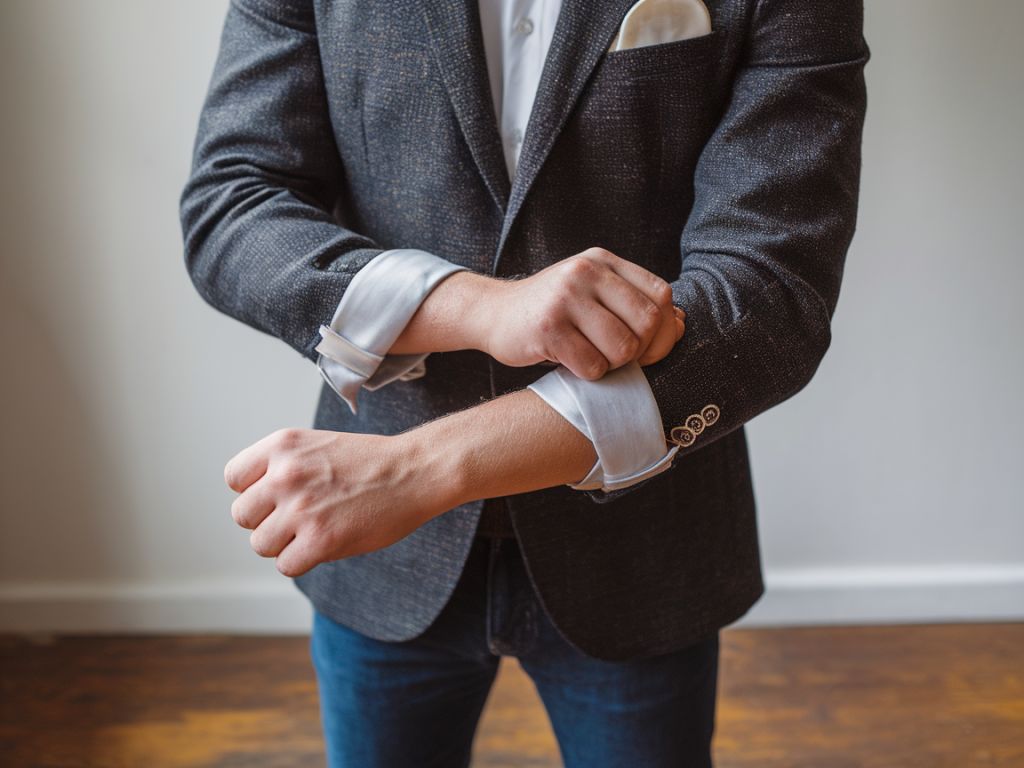
Sleeves that are too long or too short change the whole look. The classic blazer sleeve should ideally show a sliver of shirt cuff if you're layering, or sit neatly at the wrist for a cleaner, feminine look.
Two options:
- Shorten from the cuff: This keeps the natural sleeve shape and any detail at the cuff (like buttons). Good when the lining is removable or the tailor can open and reattach it.
- Shorten at the shoulder: This can alter the shoulder pitch and is more complex — only for pronounced length issues or when the sleeve head needs to be re-positioned.
When I have sleeves shortened I always have the tailor check the armhole and sleeve head so the blazer doesn’t pull when I move. Expect to pay a little more if the blazer has functional buttonholes on the cuff (surgeon’s cuffs), because these need careful recreation.
Adjust the length for modern proportion
Length changes can modernise a vintage or high-street blazer quickly. Cropping a longline blazer a few inches can make it work with skirts and high-waisted trousers; lengthening is trickier but sometimes possible if there's extra hem allowance or if a hem band can be added.
Quick rules I follow:
- If you want a blazer for jeans and trousers, aim for the hem to hit around the hip bone for balanced proportions.
- For skirts and dresses, a slightly longer blazer (mid-hip) can feel more elegant and elongate the body.
- Keep pocket placement in mind — shortening too much can steal pocket function or make them look awkward.
Hem work is usually straightforward and affordable; it's one of the best value alterations for a complete style update.
Change buttons and lapel details for instant personality
Sometimes the simplest edits are visual rather than structural. Swapping out cheap plastic buttons for matte metal, horn, or mother-of-pearl buttons instantly elevates a blazer. Changing the button placement to a higher or lower button stance can subtly alter the fit, too.
Other small tweaks I love:
- Add a working buttonhole on the lapel to pin a brooch or boutonnière for special occasions.
- Replace shiny gold hardware with aged brass or black for a more modern feel.
- Change pocket styles — flap to welt or remove the flap for a sleeker look.
These are low-cost, high-impact changes that make a blazer feel intentional and curated.
| Adjustment | Typical cost (UK) | Impact |
|---|---|---|
| Shoulder pad swap/removal | £15–£40 | High — fixes boxy shoulders |
| Take in sides / add darts | £25–£70 | Very high — defines waist |
| Shorten sleeves | £15–£40 | High — improves proportions |
| Shorten hem | £18–£50 | High — modernises length |
| Change buttons / details | £5–£30 | Medium — boosts polish |
I often pair these tailoring fixes with mindful shopping. Brands like <i>& Other Stories</i> and <i>Mango</i> make great high-street blazers that respond well to small adjustments — they have nice fabrics and simple linings so tailors can work easily. For heavier-weight blazers (think wool blends from <i>Uniqlo</i> or <i>Reiss outlet finds</i>) you may pay a little more to alter, but the result can look like a bespoke piece.
One practical habit I recommend: bring the blazer to your tailor with a specific outfit in mind. Trying the jacket on with the blouse or knit you plan to wear most often helps the tailor judge the necessary ease and the sleeve length you prefer. Also, keep a photo of your ideal blazer silhouette — it makes communication far easier.
Finally, build a relationship with a good local tailor. Once you find someone who understands your proportions and style, small adjustments become part of your wardrobe routine. For £30–£60 you can transform a high-street find into a piece that looks like it was made for you — and that’s my favourite kind of style win.
