Blazers are one of those wardrobe staples that can lift an outfit in an instant — but they can also feel overpowering if the cut or proportion isn’t right for your body. I’ve tried my fair share of structured jackets (and the ones that sat unloved at the back of my wardrobe), so I always look for ways to make a blazer flatter instead of overwhelm. Below I share practical tips on how to style a blazer for three common body shapes so each look feels effortless, confident and wearable for everyday life.
Why proportion matters more than the label
Before we get into specific body shapes, I want to underline a simple point: the blazer's proportions matter more than the brand or the price tag. A luxe Balmain-esque oversized shoulder will read differently on a petite frame than on a tall one; conversely, a cropped boxy jacket can be a revelation for someone with a shorter torso. Fit, length, shoulder line and closure are the four things I check first when trying on a blazer.
Key blazer features to evaluate
When you’re trying blazers on in-store (or ordering online), keep these features in mind:
Pear-shaped: balance hips with upper-body structure
If you carry weight around the hips and thighs and have narrower shoulders, the aim is to broaden or accentuate the upper body to balance proportions. I find that a blazer that adds subtle structure across the shoulders and defines the waist is the most flattering option.
What to look for:
Styling ideas I love:
Accessories and finishing touches:
Hourglass: emphasise your waist but respect shoulder-to-hip harmony
Hourglass figures benefit from defined waists, but heavy shoulder structure can feel redundant if it competes with your natural proportions. The goal here is to highlight what you already have by focusing on tailoring and choice of closure.
What to look for:
Styling ideas I reach for:
Accessories and finishing touches:
Rectangle / athletic: create curves and sculpt the waist
If your shoulders, waist and hips are fairly aligned, the aim is to create the suggestion of curves and visual interest. Play with shapes, closures and layering to add depth.
What to look for:
Styling ideas I recommend:
Accessories and finishing touches:
Quick-fit checklist when trying on a blazer
Use this simple checklist every time you try a blazer so it flatters rather than overwhelms:
Fabric, colour and care tips that make blazers work harder
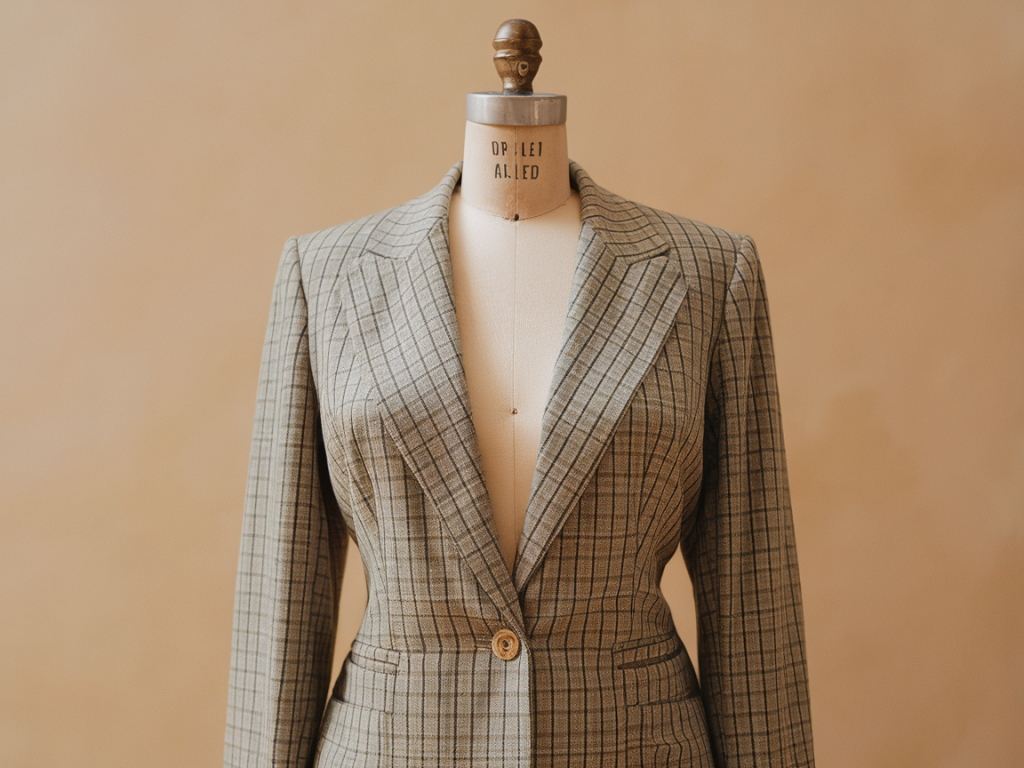
Fabric choice affects how a blazer sits on the body. Lightweight wool and blended fabrics give structure without stiffness; cotton and linen blazers are relaxed but can lose shape. For everyday versatility, look for partially lined options that keep the silhouette clean while remaining comfortable. Colour and pattern are tools: dark, monotone blazers streamline, while small checks, pinstripes or herringbone can add interest without overpowering.
Finally, tailoring is your secret weapon. A well-cut blazer from a mid-price brand (think Mango Suit, J.Crew or Marks & Spencer) can transform with a single adjustment at the waist or sleeve. I always recommend getting sleeves tailored to your wrist — it makes even an off-the-rack jacket look intentional.
| Body Shape | Recommended Features | Styling Tip |
|---|---|---|
| Pear | Structured shoulders, hip-skimming length, single button | Draw focus up with lighter shades or patterns on the blazer |
| Hourglass | Nipped waist, single-button/belted, medium shoulder | Button or belt to show your waist; pair with high-waisted trousers |
| Rectangle/Athletic | Cropped or peplum, textured fabrics, defined seams | Create curves with belts, flared skirts or double-breasted shapes |
I hope these shape-focused tips make blazer shopping and styling feel a bit less overwhelming. My favourite approach is always to try a few different silhouettes — sometimes the jacket you least expect becomes the piece that makes everything else in your wardrobe sing.