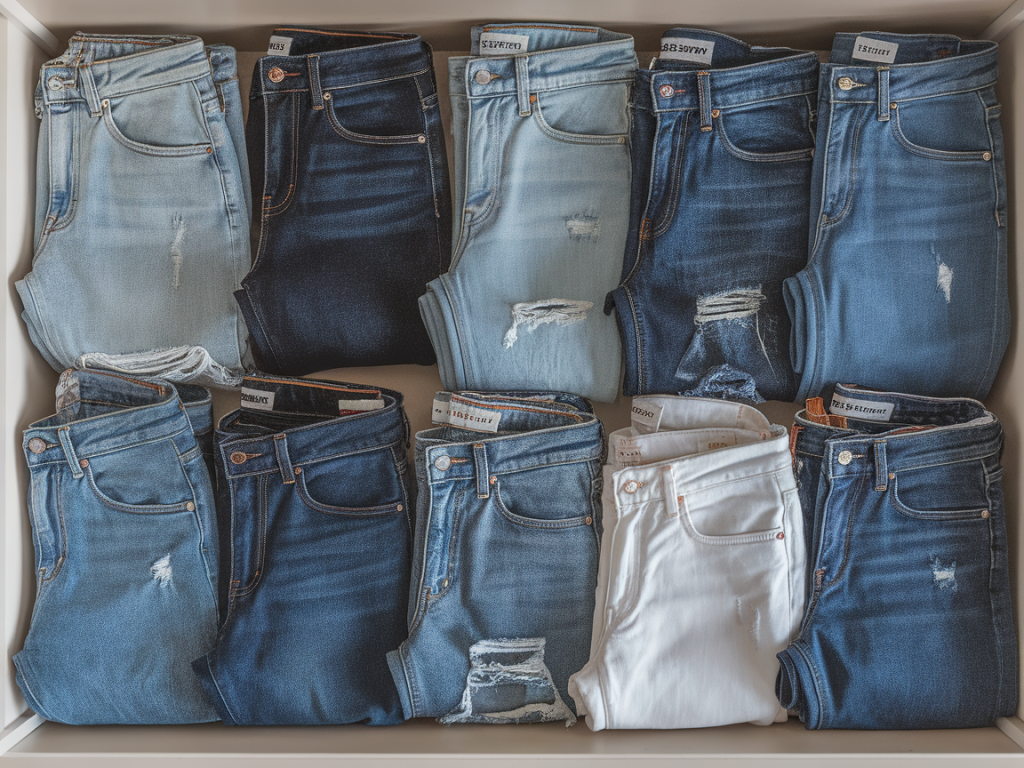
I remember the day my jeans drawer felt like a stranger’s wardrobe. Sizes had shifted—thanks to pregnancy, a new workout habit, or simply life—and everything either gaped at the waist or felt impossibly snug. Rebuilding that drawer doesn’t have to be stressful. With a few practical measurements, a clear idea of the silhouettes that flatter your current shape, and a tiny investment in tailoring, you can create a denim rotation that feels comfortable and stylish every day.
Start with honest measurements — not the size on the label
The single most helpful thing I do before shopping is measure myself. Jeans sizes vary wildly between brands, so measurements matter more than numbers. Here’s what I measure and how:
- Waist — Measure at the narrowest part (or where you wear your jeans). Keep the tape snug but not tight.
- Hips — Measure at the fullest part of your hips and bum.
- Rise — Measure from the crotch seam to the top of the waistband on a pair of jeans that fit you well, or measure on your body from the crotch to where you want the waist to sit (high, mid or low).
- Thigh — Measure the widest part of your upper thigh to see how fitted you like your leg to be.
Write these down. When I shop online I compare these numbers to the brand’s size chart rather than relying on a numerical size.
Understand the key fit details
Not all "size changes" mean you should buy the same cut you had before. Pay attention to:
- Rise — High-rise skims the waist and lengthens the legs; mid-rise is the most forgiving and comfortable; low-rise sits lower on the hips.
- Fabric stretch — Rigid (100% cotton) denim shapes differently from 1–3% elastane stretch denim. If your size fluctuates, fabrics with some stretch offer more comfort but less structure.
- Leg profile — Slim/skinny, straight, tapered, wide-leg, flared. Each creates a distinct balance with your proportions.
- Waist finish — A contoured waistband or higher back rise stops gaping at the back, a common issue after weight change.
Which cuts flatter different waistline changes
Below is a quick guide I use to match new measurements with flattering jeans styles. Think of this as a cheat sheet rather than a rulebook — personal comfort and taste always win.
| Situation | Recommended cuts | Why it works |
|---|---|---|
| Smaller waist/same hips | High-rise straight, slim-straight, or tapered with contoured waistband | Prevents back-gaping and defines waist without tightness across hips |
| Smaller all-over | Slim, straight, or cropped wide-leg (for balance) | Maintain proportion; cropped hems prevent swamping |
| Larger waist, same hips | High-rise, mid-weight stretch straight, or relaxed mum jeans | High rise supports the midsection; stretch adds comfort |
| Larger all-over | Relaxed straight, wide-leg, or bootcut in mid-rise | Comfort and movement, while balancing proportions |
| Fluctuating sizes | Jeans with 2% elastane, adjustable waistbands, or side shirring | Offers flexibility day-to-day |
Brands and fits I recommend (budget to investment)
I test looks across budgets and shapes; here are brand suggestions by fit that often work well after a size change:
- Best for reliable classics: Levi’s (501 for straight, 721 High Rise for skinny, Wedgie for vintage high-rise shaping)
- Great mid-range: Madewell (Perfect Vintage Straight, High-Rise Slim), & Other Stories (for contemporary cuts)
- High-stretch comfortable options: Uniqlo (Stretch Skinny), Gap (True Skinny/True Straight)
- For tailoring-friendly rigid denim: Frame, AGOLDE (investment pieces that hold shape)
- Budget-friendly & on-trend: ASOS (own label fit varieties), H&M (mom jeans, relaxed fits)
- Inclusive sizing and curvy-focused: Good American, Everlane (tailored cuts and more inclusive fit ranges)
- Ethical/sustainable options: People Tree, Kowtow, Patagonia’s workwear denim
Shopping strategy to rebuild your drawer
I approach a rebuild like assembling a capsule: start with pieces that cover most of my life and add one or two statement pairs.
- Buy one everyday pair: straight or slim-straight in dark indigo for versatility.
- Add a relaxed pair for weekends: boyfriend or wide-leg in a lighter wash.
- Choose one smart pair: dark, tapered or skinny with no distressing for meetings or evenings out.
- Invest in one statement or trend pair: coloured denim, wide-leg, or a flare if you want variety.
Try on multiple sizes and take photos—sitting, walking, and bending—so you can see real-life fit. If you’re between sizes, try both because a 30 in one brand can feel like a different 30 elsewhere.
Tailoring tricks to salvage or perfect jeans
Before you donate a pair, think tailoring. A good tailor can:
- Take in the waist (if the jeans fit everywhere else).
- Add darts or a contoured waistband to prevent back-gaping.
- Shorten hems or taper legs for a better silhouette.
When I find a pair with the right rise and leg but too much waist, I usually pay for a small waist alteration—it's often cheaper than buying new jeans and keeps the fit I already love.
Care and maintenance to keep your jeans fitting longer
Denim care affects shape. My simple rules:
- Wash inside out, cold, sparingly (every 6–10 wears for most denim).
- Air dry on a flat surface or hang by the waist to keep shape.
- Avoid over-stretching when wet; don’t wear tiny jeans hoping they'll stretch hugely—rigid denim stretches less after the first wear.
Decluttering and storing the old pairs
Be realistic. Keep the pairs that fit well or have sentimental/quality value for alterations. For others:
- Sell or consign designer or quality pairs (Depop, Vinted, local consignment shops).
- Donate gently used jeans to local charities.
- Repurpose very worn denim into shorts, patches, or household rags—don’t let useful fabric go to waste.
Rebuilding your jeans drawer is a mix of measurement, knowing the silhouettes that flatter your new proportions, and being strategic about the pieces you invest in. With a small plan and a couple of tried-and-true brands in your rotation, you’ll have a drawer that feels like you again—comfortable, flattering and ready for any weekend or workday.