I remember the summer I underestimated the sun: a day of sightseeing, a pale complexion and, by evening, the unmistakable heat, tightness and redness of a sunburn. Since then I've learned to treat sunburns quickly and gently — and one product that often comes up in conversations and reviews is Cicaplast Baume B5. In this piece I’ll share my personal, practical conseils pour apaiser un coup de soleil rapidement, how I use Cicaplast Baume B5 in that routine, and evidence-based steps to soothe and help skin recover fast.
Why acting fast matters: a quick science snapshot
When skin is sunburned, ultraviolet (UV) radiation damages DNA and causes inflammation. The immediate goal is to reduce heat, pain and further inflammation; the medium-term goal is to support the skin barrier so it can repair efficiently. Some numbers that put things in perspective:
- Each year, over 2 million cases of non-melanoma skin cancer are linked to UV exposure globally — prevention matters (World Health Organization).
- Sunburn is an acute inflammatory response: up to 72 hours post-exposure symptoms can worsen before improving.
- Topical treatments that support barrier repair and reduce inflammation can shorten recovery time and minimize peeling and discomfort.
Sources I find useful: NHS guidance on sunburn and first aid (NHS), dermatology review articles on UV damage (PubMed Central), and product data from manufacturers like La Roche-Posay and Bioderma for ingredients context.
Immediate steps I take for a fresh sunburn
Right after I realize I’m burned, I follow a simple step-by-step routine to cool and limit damage. These are practical and backed by common first aid guidance:
- Get out of the sun immediately to prevent further UV exposure.
- Cool the skin: a cool shower or compress for 10–15 minutes helps reduce heat and inflammation. Avoid ice directly on the skin.
- Hydrate: drink water to replace fluids — sunburn draws fluid to the skin’s surface and can lead to dehydration.
- Use a gentle cleanser: avoid harsh soaps; opt for a mild, fragrance-free cleanser.
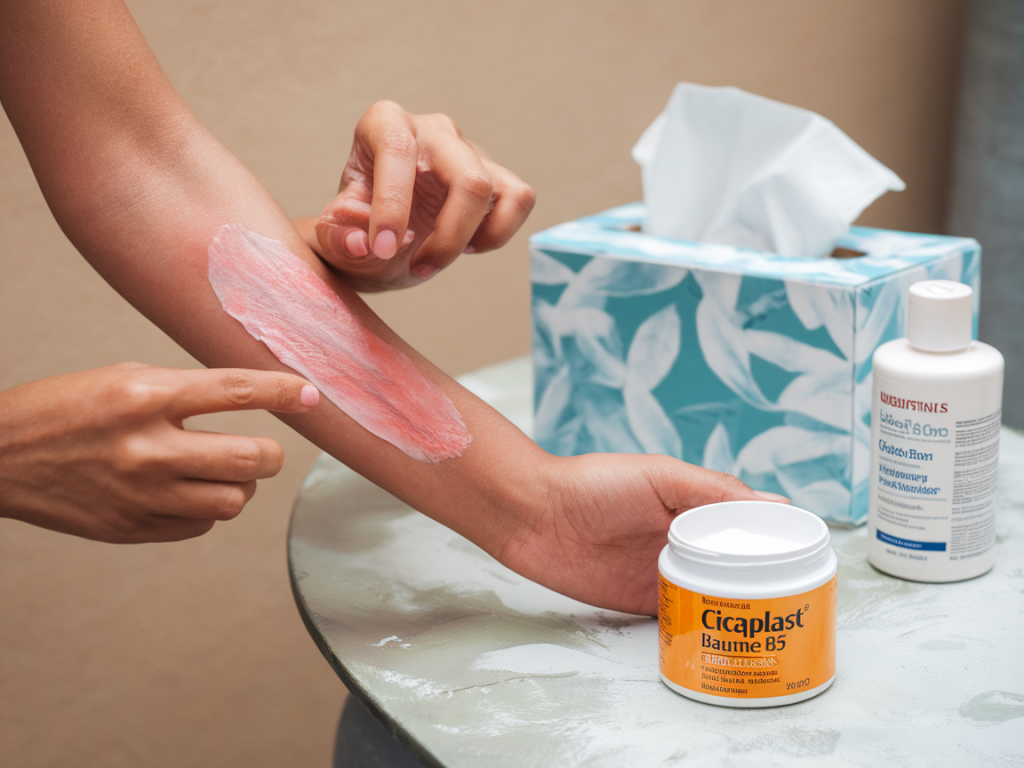
- Moisturize and protect: apply a soothing, barrier-supporting product like Cicaplast Baume B5 after cooling the area.
Why I use Cicaplast Baume B5 for sunburn
Cicaplast Baume B5 (by La Roche-Posay) is a multi-repair balm that’s become a staple in my beauty kit. Here’s why it’s a strong option for sunburn care:
- Formulated to be soothing and restorative — contains panthenol (vitamin B5) which helps hydrate and aid epidermal repair.
- Rich, protective texture that creates a breathable barrier to prevent further moisture loss without occluding completely.
- Fragrance-free and suitable for sensitive skin, which is crucial when the skin is reactive after sun exposure.
- Available in small tubes and jars — convenient for travel and post-beach emergency kits.
Ingredient highlights: 5% panthenol (soothing, repairing), glycerin for hydration, and shea butter for emollient protection. For clinical context see La Roche-Posay’s product page and independent ingredient analyses (La Roche-Posay).
How I apply Cicaplast Baume B5 step-by-step
Application technique matters when skin is tender. I follow this method to get maximum relief and avoid irritation:
- Cool the sunburn first with lukewarm water; pat dry gently — never rub.
- With clean hands, take a pea-sized amount for a small area; more for larger areas. Less is better than more — you want a thin, even layer.
- Apply using gentle pats rather than rubbing to avoid friction. Let the balm sit and form a light protective film.
- Reapply 2–3 times daily or after cooling showers. If skin oozes or blisters heavily, seek medical advice before applying any balm.
Complementary measures I always use
Topical care is important, but I pair Cicaplast with other measures for faster comfort and healing:
- Pain relief: I take paracetamol or ibuprofen as needed to reduce pain and inflammation (follow dosing instructions and check contraindications).
- Hydration: oral hydration and sometimes electrolyte drinks if I’ve been in the sun a long time.
- Loose clothing: breathable cotton garments to avoid rubbing the burnt area.
- Avoid peeling or picking: let the skin exfoliate naturally — interfering increases scarring risk.
- Sun protection: until fully healed, I keep the area covered or use SPF 50+ if exposure is unavoidable. Repeat application of sunscreen is essential (every 2 hours when outside).
When to see a doctor — red flags I watch for
Most mild-to-moderate sunburns can be managed at home, but I always stay alert for signs that require medical advice or urgent care:
- Severe blisters covering a large area
- High fever, chills, dizziness, or confusion
- Signs of infection: increasing pain, pus, spreading redness
- Sunburn in young children, infants, or people with immune suppression
NHS guidance recommends medical attention for these symptoms — better safe than sorry (NHS Sunburn).
Comparative table: Cicaplast Baume B5 vs other common after-sun options
| Product / Feature | Main soothing ingredient | Best for | Notes |
|---|---|---|---|
| Cicaplast Baume B5 | Panthenol (B5), glycerin, shea butter | Repairing, sensitive, barrier support | Fragrance-free, thicker balm texture |
| Aloe vera gel | Aloe vera extract | Cooling, light relief | Provides cooling but less barrier protection |
| After-sun lotions (e.g., containing glycerin) | Glycerin, panthenol in some | Hydration, everyday soothing | Light texture; may need reapplication |
| Hydrocortisone 1% cream | Topical steroid | Severe itching/inflammation (short term) | Use sparingly and short-term; not ideal for large-scale burns |
Practical tips I swear by for faster recovery
- Keep a travel-size tube of Cicaplast in your bag during summer — immediate application after cooling helps.
- Rotate between cooling compresses and balm application: cool compress for 10–15 minutes, then apply balm once skin is dry.
- Use fragrance-free, hypoallergenic fabrics (cotton, bamboo) while healing.
- Log your burn: note time of exposure and progression of symptoms. It helps if you need to consult a clinician.
- Avoid retinoids or exfoliating acids until the skin has fully recovered — they can worsen irritation.
What the studies say — quick references
For readers who like sources, here are trustworthy references I consulted while shaping these recommendations:
- NHS — Sunburn (practical first aid and when to seek help)
- PubMed Central — UV radiation and skin damage review
- La Roche-Posay — product information (ingredient list and recommended use)
FAQ — quick answers I often give friends
Can Cicaplast Baume B5 stop peeling? It can reduce dryness and support the barrier so peeling is usually less severe, but it won’t prevent natural exfoliation.
Is it safe on blisters? For intact skin around blisters, yes. For open, weeping blisters, consult a healthcare professional first.
How often should I apply? 2–3 times daily or as needed after cooling the area. Adjust frequency based on comfort and dryness.